
Contents
Key points
- Starting a landscaping business is a process, not a document: pick your niche, register, license, insure, then buy equipment, in that order.
- Cost guides disagree because they describe different businesses. This guide breaks down a real $3,000–$6,000 lean start next to a $15,000–$40,000 fuller start.
- $1,000 in seed money sounds like enough on Reddit. It barely covers a used trimmer and some flyers once insurance and a mower are in the budget.
- A solo owner on a mower can’t answer the phone, and homeowners hire whoever calls back first. Answering the phone is a startup cost, same as insurance.
- Year one is usually tight, not profitable. Build a cash cushion before slow-paying customers and rainy weeks catch you off guard.
Starting a landscaping business does not require a big loan or a fleet of trucks. Most owners begin with a mower, a trailer or truck bed, and a handful of tools, then build from there. This guide walks the process in order: picking your services, registering the business, getting licensed and insured, buying equipment, setting prices, and landing your first customers. If you want the actual planning document a lender expects to see, read our guide on how to write a landscaping business plan. This guide is about the steps that come before and around it.
Pick your services and niche
Decide what you’re selling before anything else. Most new owners start with mowing and yard maintenance, since it needs the least equipment and brings in steady weekly work. Others lean toward design-build work like planting and patios, or a specialty like irrigation or outdoor lighting. Your choice drives everything that follows, from what license you need to how much equipment costs. Many owners run a mix: mowing to fill the calendar, then higher-margin work like installs once they have a truck and a few regular customers. Write down your first two or three services before you spend a dollar on equipment, since a mower buys you mowing work and nothing else.
Choose a business structure and register
Most new landscapers choose between a sole proprietorship and a limited liability company, or LLC. A sole proprietorship is the default if you do nothing: no extra paperwork, but your personal savings and home are not protected if a customer sues over a damaged fence or a trailer accident. An LLC costs a state filing fee, usually somewhere between $50 and a few hundred dollars depending on the state, and it keeps your personal assets separate from the business. Once you pick a structure, register your business name with your state and get a free Employer Identification Number, or EIN, from the IRS. You’ll need the EIN to open a business bank account and, later, to hire anyone.
Get your licenses and permits
Landscaping licensing rules vary a lot by state and by what you offer. Basic mowing and maintenance often need nothing more than a standard business license from your city or county. Anything involving pesticides, herbicides, or fertilizer application usually needs a separate state-issued Commercial Pesticide Applicator’s License, which typically means passing an exam. Check your state’s department of agriculture before you spray anything for a customer. If you plan to build hardscaping like patios or retaining walls, some states also require a contractor’s license above a certain job size.
Get insured before your first job
General liability insurance is the one policy every landscaper needs. It covers the damage that comes with the job: a rock thrown from a mower that cracks a window, a mis-cut irrigation line, a slip-and-fall on a wet lawn. If you drive a truck or tow a trailer for work, add commercial auto insurance, since your personal car policy usually will not cover an accident that happens on the clock. Once you hire your first employee, most states also require workers’ compensation insurance. Skipping insurance to save money is one of the fastest ways a single bad job turns into a business-ending lawsuit.
Open a dedicated business bank account
Once you have your EIN, open a business checking account and keep every business dollar out of your personal account. This matters for two reasons. It protects the liability shield an LLC gives you, and it makes tax season and loan applications far simpler, since you can hand a lender or accountant a clean set of statements instead of picking business purchases out of your personal spending.
Buy your equipment: lean start vs. fuller start
This is where cost estimates for landscaping businesses fall apart online. The Hartford puts the average startup cost at $5,000 to $15,000, while DynaScape says basic equipment alone runs $12,000 up to $85,000 or more. Neither figure is wrong. They are describing two different businesses. Here is what actually separates a lean start from a fuller one.
Lean start: about $3,000 to $6,000
A lean start means used equipment, borrowed hauling, and only the insurance you legally need to work:
- Used push mower, trimmer, and blower: $800–$1,500
- Basic hand tools (rake, shovels, edger): about $200
- Hauling in the bed of a truck or car you already own, or a borrowed trailer: $0
- LLC filing fee: $50–$500 depending on state
- EIN from the IRS: free
- General liability insurance: about $500–$900 a year
- Business cards and flyers: $100–$300
- Google Business Profile: free
That’s a real lean start, not the fantasy version. It’s also more honest than the $1,000 in seed money one 19-year-old described on Reddit when asking for startup advice. A thousand dollars covers a used trimmer, some flyers, and maybe an LLC filing in a cheap state. It does not cover a mower, insurance, and hand tools together. Most real lean starts still land at $3,000 or more once a working mower and a year of insurance are in the budget.
Fuller start: about $15,000 to $40,000
A fuller start means new equipment, a dedicated truck and trailer, and a full insurance package from day one:
- New commercial-grade walk-behind or zero-turn mower: $4,000–$10,000+
- Dedicated used truck: $8,000–$20,000
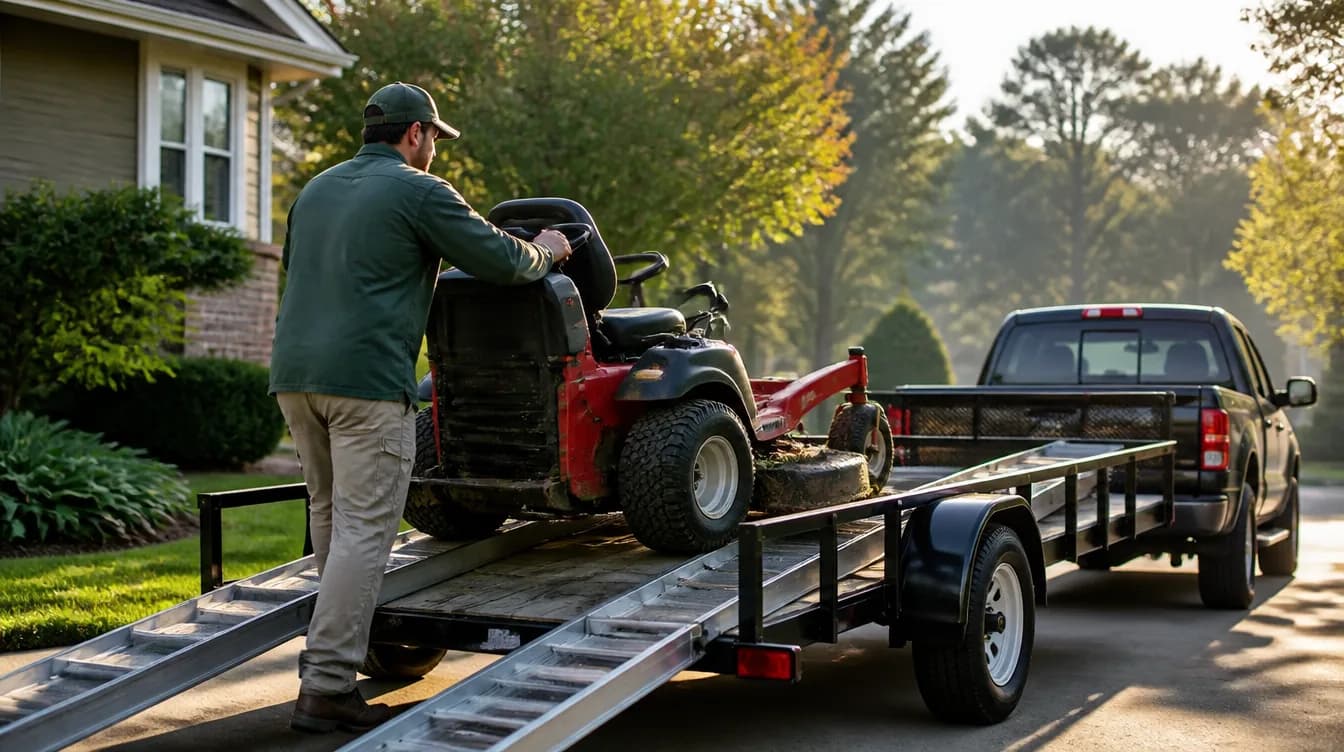
- Enclosed or dump trailer: $3,000–$8,000
- Full insurance package (general liability, commercial auto, and workers’ comp if hiring): $1,500–$4,000+ a year
- Business software or a CRM: a few hundred dollars a year
- Professional branding, signage, and a real website: $500–$2,000
Stack the higher end of a fuller start with add-on equipment like irrigation gear or a skid steer, and you land near DynaScape’s $85,000 ceiling. The gap between the two published ranges isn’t a disagreement between sources. It’s the gap between a mower and a trailer bought used with cash, and a small fleet bought new on financing.
Set your prices
Whatever you spent to start, price your jobs to cover it. Our landscaping pricing guide walks through building an hourly rate and pricing a job from start to finish, and DynaScape recommends aiming for a 15 to 20 percent profit margin once your equipment, fuel, and insurance costs are covered. Underpricing to win your first few customers is common, and it’s the fastest way to work full weeks and still fall behind on bills. When you go to quote a job, use our landscaping estimate template so every price you give out is built the same way, instead of guessed on the spot.
Land your first customers
Your first customers usually come from people who already know you: neighbors, friends, family, and word of mouth. From there, a complete Google Business Profile, yard signs on jobs you finish, and local Facebook or Nextdoor groups do most of the early work. Ask every happy customer for a review before you move on to the next job, since a handful of good reviews does more for a new landscaper than any paid ad. Use our landscaping contract template to put terms in writing from your very first job, so scope and payment are never a guessing game.
The phone problem no one warns you about
Here’s what none of the startup guides mention: when you’re solo, you’re also the entire office. A homeowner comparing quotes typically calls three or four landscapers and hires whoever answers or calls back first. If you’re behind a mower with the engine running, that call goes to voicemail, and the job goes to whoever picked up. One landscaper on Reddit described a workaround as his business grew: an old phone activated for $25 a month as a dedicated business line, just to keep work calls separate from his own phone. That fixes the number problem. It doesn’t fix who actually answers while you’re on a job. An AI receptionist like EveryDial can pick up every call in your business name and book the job while your hands are full. Run the numbers for your own market with the missed-call cost calculator before you decide voicemail is good enough.
EveryDial answers every call in your business name and books the job while you’re behind the mower. Free to try.
What year one actually feels like
Startup guides describe a steady climb. Owners describe something rougher. One five-year landscaper summed up the cash-flow side on Reddit: “If you get 1-2 rain days a month that’s typically good to cover it. If not you’re fucked. You’ll be doing billing at 1 in the morning... Customers will call/text you all night and all weekend.” That’s the honest version of year one: seasonal income, slow-paying customers, and office work stacked on top of physical labor. Build a cash cushion before you start, and expect the business to feel tight before it feels steady.
None of this is a reason to wait. It’s a reason to start lean, price honestly, and put a system in place, insurance, a signed contract, and someone answering the phone, before the first missed call becomes the first customer you lose.
Frequently asked questions
How do I start a small landscaping business?
Start by picking your services, then register your business and get an EIN. After that, get liability insurance, open a business bank account, buy the equipment you actually need, and price your jobs to cover your costs. Most solo owners land their first jobs through word of mouth and a Google Business Profile before they spend anything on ads.
Do I need a license to run a landscaping business?
It depends on your state and what you offer. Basic mowing and maintenance usually just need a standard city or county business license. If you apply pesticides, herbicides, or fertilizer, most states require a separate Commercial Pesticide Applicator’s License with its own exam.
How do I start a landscaping business with no money?
You can’t truly start with no money, but you can start lean. A used mower, trimmer, and blower, basic hand tools, an LLC filing, and a year of general liability insurance can add up to roughly $3,000 to $6,000. A Reddit user who started with $1,000 in seed money found that budget only covers a used trimmer and some flyers, not a full lean start.
What equipment do I need to start a landscaping business?
At minimum: a mower, a trimmer, a blower, and basic hand tools, plus a way to haul them, whether that’s a truck bed or a trailer. Everything past that, like a zero-turn mower or an enclosed trailer, is an upgrade you add once the work justifies it.
How much does it cost to start a landscaping business?
It depends heavily on how lean you start. The Hartford estimates $5,000 to $15,000, while DynaScape puts basic equipment alone at $12,000 to $85,000 or more. Both are right for different starting points: a lean start with used gear runs closer to $3,000 to $6,000, while a fuller start with new equipment and a dedicated truck runs $15,000 to $40,000 or more.