
Contents
Key points
- Startup budgets range from about $3,500 to $150,000 or more, but the spread comes from one decision, which vehicle you buy, not a disagreement about the trade.
- Licensing splits into two separate checks: a general business license everyone needs, and a separate waste hauler permit on top of it. Some states issue that one, others leave it to cities and counties, so check both levels.
- Scrap value of $50 to $150 a cleanout offsets roughly one to two tons of tipping fees. Work it out against your own local rate per ton, because that rate swings by more than three times across regions.
- A 1-800-GOT-JUNK franchise costs $107,400 to $140,400 to open plus an 8 percent ongoing royalty, roughly 18 to 40 times the lean independent bootstrap tier.
- Residential junk removal is a one-time distress call. Whoever answers the phone first usually gets the job, which makes a missed call cost more here than in most trades.
If you are figuring out how to start a junk removal business, the work itself is simple: you load junk, you haul it away, and you charge for the volume you take. The paperwork is where people get stuck. The real decisions are which vehicle to buy, what license or permit applies where you live, and how you price a job so the dump fee does not eat your profit.
This guide covers every step in order: picking a vehicle and a startup tier, registering the business, getting licensed and insured, pricing by the load, and turning your first calls into paying customers. For the plan document and the full money model, see our junk removal business plan guide.
Pick your vehicle and your startup tier
Published startup budgets for this business run from about $3,500 to more than $150,000. That is not seven different opinions about the trade. It is one decision, priced out at three different levels: what vehicle you show up with. Once you line the three tiers up, the spread stops looking like a disagreement.
Tier 1: pickup and trailer
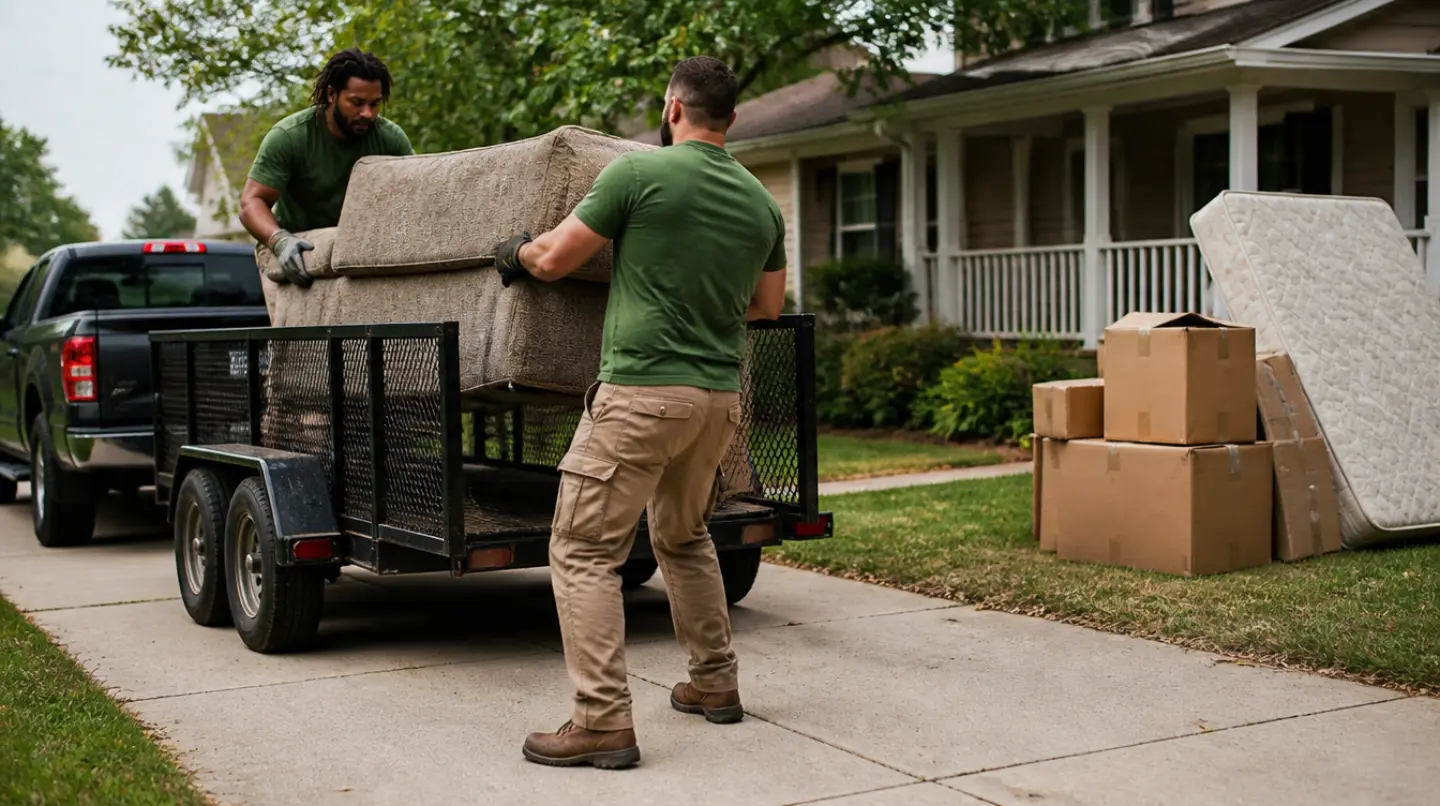
If you already own a pickup, the leanest start is quoted at $3,500 to $6,000 for the first year. Its named line items are a 6x12 utility trailer at $1,500 to $2,500, general liability at $500 to $800 a year, basic equipment at $300 to $500, an LLC filing at $100 to $300, and a website at about $30 a month. Add those up and you get roughly $2,760 to $4,460, so the source's own headline sits above its own list. Take the line items as the reliable part and treat the headline as padded for the things it did not name. A separate estimate for an ultra-lean solo start covers the same ground at $2,500 to $6,000.
Tier 2: a used one-truck operation
Move up to a dedicated used box truck and the first-year cost jumps to $25,000 to $45,000, mostly because the truck itself runs $15,000 to $25,000. A separate estimate for a professional one-truck start lands close by, at $22,000 to $40,000. A used single-axle dump truck is a comparable buy, at $25,000 to $50,000. A smaller used vehicle can come in lower, at $10,000 to $20,000, per a third estimate. All four figures describe the same decision: one dedicated used work vehicle instead of a trailer behind your own truck.
Tier 3: multi-truck, and one number that does not fit
A growth-oriented launch with several trucks and a crew runs $60,000 to $150,000 or more. That is the tier the biggest numbers belong to.
One figure does not fit the pattern, and it is worth knowing why. A gig network's own guide answers "how much does it cost to start a junk removal business" with $90k to $150k or more. Read its body and that range spans two different paths: about $90k and up for going independent, and $150k and up for buying a franchise. Its independent figure leans on a box truck at $25,000 to $50,000 when purchased new. Buy the same truck used and other sources price it at $15,000 to $25,000, which is most of the gap. Note who is publishing it too: the same company then invites you to skip buying a box truck and haul its jobs with the truck you already own. That is a real option, not a trick, but it does mean the big number and the invitation come from the same page. Treat it as one company's new-equipment estimate, not the price of entry.
Register your business and decide on an LLC
Most people starting a junk removal business choose between a sole proprietorship and an LLC. A sole proprietorship costs nothing extra and is the default once you register a name and open a bank account. An LLC filing costs $100 to $300 and takes two to four weeks to process, and a separate estimate puts general business registration at $100 to $500. The LLC fee is worth paying once you are driving a truck full of someone else's furniture down the highway. If a load shifts and damages a driveway or another car, an LLC keeps that claim away from your personal savings.
Get licensed: what actually varies by state
There are two separate things to check here. People get stuck because they run them together. One reader on Reddit searched the New York State site for an answer and never got one. Here is why. The first thing is a general business registration and a local business license. That is the same paperwork most small businesses file. It runs $50 to $500 depending on city and county. The second is a waste hauler permit. Some cities and counties require one just for hauling and dumping trash, on top of the general license. Where that second one lives is what trips people up. Some states license waste transporters directly, through their environmental agency. Others leave it entirely to cities and counties. That is why there is no general answer to give, and why searching one state site can come back empty even when a permit does exist somewhere. So check both levels. Search your state environmental agency for "waste transporter permit", then your city or county name plus "waste hauler permit" or "solid waste collector permit". Do not search "business license" on its own. If neither site is clear, call the county clerk.
Carry insurance before your first job
General liability insurance runs $500 to $1,200 a year for $1 million in coverage. Add commercial auto once you have a dedicated work vehicle, at $2,000 to $4,000 a year, more than a personal auto policy costs because you are driving a loaded truck for money. Add workers' compensation the day you hire your first employee. Skip liability coverage and one bad load, a cracked driveway, a dented parked car, a strained back, can cost more than a year of premiums.
Buy basic equipment and safety gear
Basic equipment runs $300 to $500: furniture dollies, ratchet straps, work gloves, tarps to protect floors and driveways, and a first aid kit. None of it is expensive on its own. It adds up because you need all of it before the first job, not because any single item costs much.
Price by the load, not by the hour
Junk removal is priced by volume, not time. The standard tiers run a quarter load at $150 to $250, a half load at $250 to $400, a three-quarter load at $400 to $600, and a full load at $600 to $900. Quote off these tiers instead of guessing an hourly number, and put the quote in writing before you load anything. Our junk removal estimate template uses these same tiers, and our contract template locks in the price and the scope before you start.
The disposal math: what scrap actually offsets
A typical cleanout nets $50 to $150 in scrap value: copper at $3 to $4 a pound, brass at $2 to $3, aluminum at $0.50 to $0.80, and car batteries at $10 to $15 each. That sounds like free money until you set it against what you pay to dump the rest of the load. Tipping fees run $40 to $80 a ton typically, $70 to $100 on the coasts, and $30 to $60 in the Midwest and South. Other sources put the coastal top end higher still, so call your own transfer station rather than planning off any published range. Since tipping fees are priced per ton, you can divide scrap value by the fee to see what it actually buys. At the cheapest tipping fee, $30 a ton, the high end of scrap value, $150, offsets five tons of disposal weight. At the most expensive coastal fee, $100 a ton, the low end of scrap value, $50, offsets only half a ton. Now put real jobs against that. The same source prices a garage cleanout at about 800 pounds and $40 to dump, and a bedroom cleanout at 300 pounds and $15. On jobs that size, $50 to $150 of scrap covers the dump fee outright with change left over. But it also flags construction debris that can fill a quarter of the truck and still weigh 2,000 pounds. A ton of that on a coast at $100 a ton costs $100 to tip, which eats most of a good scrap day. So scrap is a real offset on household cleanouts and close to irrelevant on heavy debris, and the deciding factor is weight, not how well you sort.
What you do with what you haul
Beyond scrap, the other two outlets are resale and donation. Usable furniture and appliances go to resale, and working goods not worth reselling go to a donation center instead of the dump, saving you a tipping fee on that item the same way scrap does. One operator on Reddit described pulling a card collection from a $550 estate cleanout that later sold for $30,000, and was careful to frame it as a once-in-a-lifetime find, not something to plan a business around. The real lesson in that story is not the payout. It is that you look through a load before you quote it and before you dump it. Knowing exactly what you are hauling protects your resale and scrap income, and it keeps you from tossing something valuable without a second look.
Franchise, independent, or gig network
You have three paths into this business. Independent is everything above: your own truck, your own license, your own customers. A gig network like LoadUp matches you to jobs without you building a customer base yourself, in exchange for a cut of each job. Franchise is the expensive path. 1-800-GOT-JUNK requires $90,000 in liquid assets and a $30,000 franchise fee, with total initial investment of $107,400 to $140,400 and an ongoing royalty of 8 percent. That total investment is roughly 18 to 40 times the lean bootstrap tier above, before the 8 percent royalty even starts eating into your revenue. The franchise buys you a recognized name and a playbook. The bootstrap tier buys you the same kind of truck and trailer for a fraction of the price, and every dollar you earn stays yours.
Get your first customers
Residential junk removal is a one-time distress purchase. A homeowner clearing out a garage or an estate is not loyal to a brand. They are calling whoever answers the phone first and can come out soon. A complete Google Business Profile, a simple site, and asking every happy customer for a review do most of the early work. Once you are also the one loading the truck, you are also the entire office, and a call that goes to voicemail is a job for the next name on the list. A receptionist for junk removal calls like EveryDial answers every call in your business name and books the job while your hands are full. It backs up whoever normally answers your phone rather than replacing anyone. See what a missed call actually costs with our missed-call cost calculator before you decide voicemail is good enough.
Your receptionist answers every call and books the job while you're on a run. $49 a month on Starter with 100 receptionist minutes included, or $149 on Pro with 400.
Keep the steps in order
None of this has to happen at once. Start with the vehicle you already have, register the business, get liability insurance, and confirm whether your state or your city needs a hauler permit before you take your first job. Price by the load, not the hour, and look through what you are hauling before you quote it or dump it. Then make sure every call actually gets answered, so the customers you are working to earn do not end up booking with whoever calls them back first.
Frequently asked questions
How much does it cost to start a junk removal business?
It depends almost entirely on the vehicle. A lean bootstrap start with a pickup and a trailer runs about $3,500 to $6,000, while a used box truck pushes that to $25,000 to $45,000 and a multi-truck launch with a crew runs $60,000 to $150,000 or more. All three figures describe the same trade at a different vehicle tier.
Do you need an LLC to start a junk removal company?
No, a sole proprietorship works and costs nothing extra to set up. Most people file an LLC anyway once they are hauling for money, since it only costs $100 to $300 and takes two to four weeks, and it keeps a bad load or an accident from reaching personal savings.
Is junk removal a good side hustle?
It can be, especially at the bootstrap tier, since a pickup and a trailer can start for about $3,500 to $6,000 in total first-year costs. The tradeoff is time, not money. You still need to answer calls, quote loads, and find a dump or scrap yard, on top of whatever job you already work.