

Contents
Key points
- An HVAC business plan needs real numbers: what it costs to open, what your jobs earn, and how many months until you break even. Skip the MBA theory.
- Startup-cost estimates swing from about $3,000 to over $100,000. The number depends mostly on one thing: whether you already own a truck and tools, or you are buying everything new.
- Most one-truck shops break even around month 8 to 12. One full system replacement in the first few months can pull that in to month 6.
- Replacements are 40 to 50 percent of revenue but the thinnest margin. Service and maintenance calls are smaller but pay 45 to 60 percent gross. A healthy plan uses all three.
- In the first months you answer the phone yourself, often from an attic. Every missed call is a $150 to $16,000 job that pays a competitor instead. Answering the phone is a line item too.
An HVAC business plan does not need to read like an MBA paper. It needs real numbers: what it costs to open the doors, what your service calls and replacements actually earn, and how many months pass before the business pays you back. This guide walks the full plan a lender or a licensing board expects to see, section by section, using numbers from people who run HVAC shops.
Below is the plan in order, a reconciled look at why startup-cost estimates run from a few thousand dollars to over a hundred thousand, a month-by-month path to break-even for a one-truck shop, and the pricing rules a 24-year owner shared on Reddit that no vendor guide mentions.
What goes in an HVAC business plan
Keep your plan to the sections that help you make decisions and that a lender or licensing board expects to see. In order:
- Executive summary: one paragraph on the business and your first-year goal. Write it last.
- Company overview: your legal structure (LLC or sole proprietor), who owns it, your service area, and what you focus on.
- Market analysis: who your customers are and who else serves your area.
- Services and pricing: the jobs you do and how you charge. Our HVAC estimate template covers this section for you.
- Marketing and sales: how you will get found and keep the phone ringing.
- Operations: your truck, suppliers, scheduling, and who answers the phone.
- Management: who does what now, and who you hire first.
- Financial plan: startup costs, revenue projections, margins, and your break-even point.
Executive summary and company overview
The executive summary sits at the top, but you write it last, once the numbers below are set. It states what the business is, where it works, and your first-year revenue goal. For a new one-truck HVAC shop, a common Year 1 projection is $150,000 to $250,000 in revenue. The company overview is short: your legal structure, who owns the business, your service area, and whether you focus on repair, installs, maintenance, or a mix. If you are applying for an SBA loan, this is also where you name how much money you are asking for and what it buys. Lenders read these two sections first, so keep them plain and specific.
Market analysis
Market analysis for a local HVAC shop is not about the size of the national industry. It is about your town. Name your customers: homeowners with aging systems, property managers with several buildings, and builders who need installs on new construction. Note the seasons, since cooling calls spike in summer and heating calls in winter, and a maintenance plan smooths the gap between them. Then list the other HVAC companies in your area, what they charge, and where they are slow to answer or slow to show up. That last gap is often where a new shop wins its first customers.
Services and pricing strategy
Your revenue comes from three kinds of work, and a healthy plan uses all three. Price each one so it carries its share of your costs and still leaves profit.
Service and repair calls
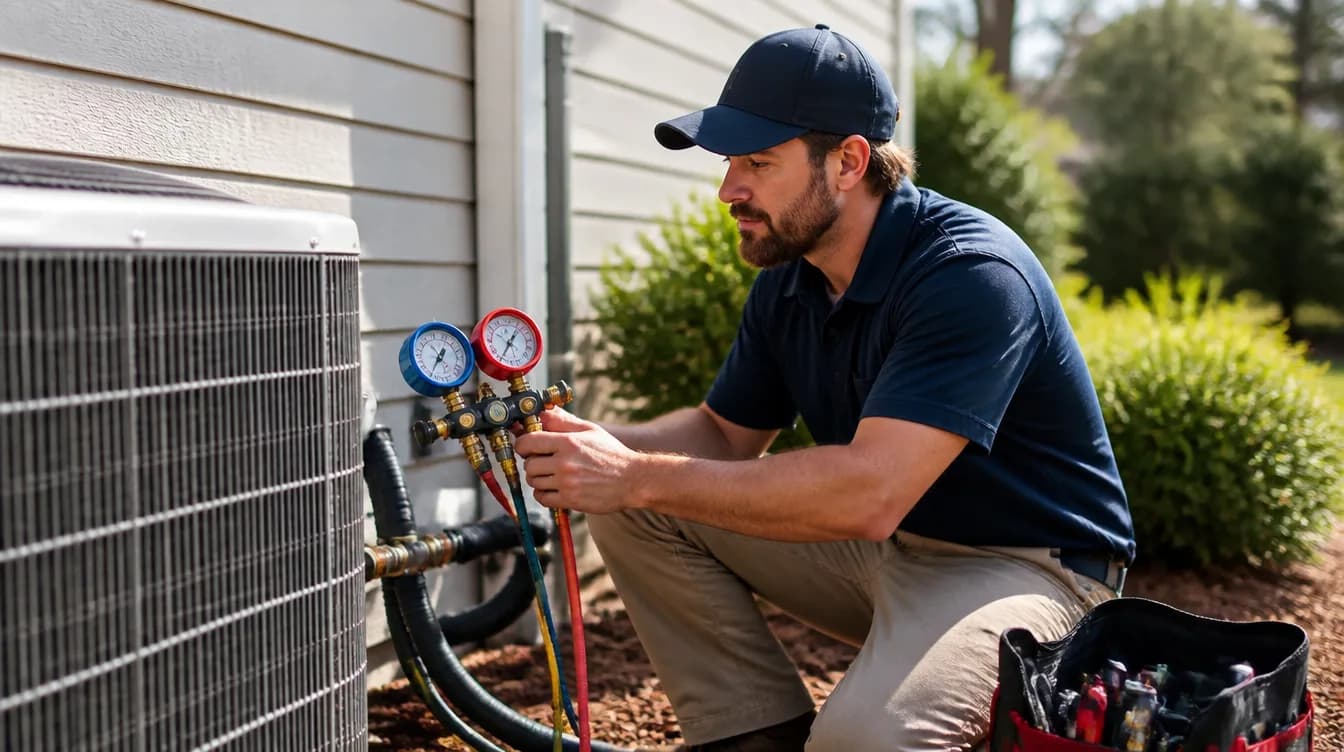
These are the day-to-day fixes. A service call typically runs $150 to $400 depending on the job, at a 45 to 55 percent gross margin. They are your steadiest work and your fastest cash, especially in your first year before you have built a name.
Maintenance agreements
A seasonal tune-up runs about $150 to $250 and carries a gross margin near 60 percent. A customer on a maintenance plan spends roughly $200 to $300 a year and calls you first when something breaks. These agreements are the closest thing to predictable revenue an HVAC shop has.
System replacements
A full system replacement runs $8,000 to $16,000 and makes up 40 to 50 percent of a typical shop's revenue, though at a thinner 35 to 45 percent gross margin. One replacement can equal dozens of service calls in revenue, which is why a single install early in your first year changes your whole break-even math.
Startup costs: why the estimates disagree
Search for HVAC startup costs and you will find numbers that do not agree. One guide says $3,000 to $12,000. Another says $30,000 to $50,000 for a small three-person team. A third puts a realistic startup at $54,500 to $105,500, with most owners landing in the $75,000 to $120,000 range. That is a ten to thirty times spread. It is not that some are wrong. They are pricing different starting points.
If you already own a truck
The low end assumes you bring the big items with you. If you already have a reliable truck and a full tool set from years as a tech, your startup is mostly a license, insurance, a business phone, and basic scheduling software. That is how a startup can honestly cost a few thousand dollars.
If you are buying everything new
The high end assumes you buy the truck, stock a full tool set, carry your first parts inventory, and cover licensing that varies a lot by state. Add a few months of your own living expenses, since the business will not pay you at first, and you are near the $75,000 to $120,000 figure. Neither number is a lie. Yours depends on what you already own and how big you start.
Financial plan: revenue, margins, and break-even
This is the section lenders read closely and the one most owners guess at. Lay out your monthly costs, your expected revenue, and the month you expect to break even. As a reference, monthly operating costs for a three-person shop have been estimated at about $10,240 in labor, $2,400 for the fleet, $2,100 for marketing, and $650 for software. A solo one-truck shop runs far leaner, but the categories are the same.
Net margins are thin and grow with scale. One breakdown puts them at 2 to 4 percent at $500,000 in revenue, 3 to 5 percent at $1 million, and 11 to 15 percent at $2 million if the shop is well run. The lesson for your plan: revenue alone is not profit, and the jump in margin comes from scale and tight management, not from charging more per job.
Month-by-month break-even for a one-truck shop
Here is the piece no ranking guide shows. Most one-truck operations break even around month 8 to 12 if they execute well. Start with your fixed monthly costs, which are insurance, fuel, phone, software, and your own pay. Divide that by your average service call to see how many booked calls a month you need to cover them. In the early months you are below that line, living off your startup cash. Then one thing can change the picture.
If you land a full system replacement in your first three months, that single $8,000 to $16,000 job can pull your break-even in to around month 6. That is why answering every call in the lean months matters so much. The one call you miss might have been the replacement that paid for your whole first year.
Operations and staffing
Operations is the day-to-day: your suppliers, your scheduling, your truck stock, and, in the first six months, who answers the phone. The honest answer for most new owners is you do, often from an attic or a crawlspace with your hands full. Every call that goes to voicemail while you are on a job is a job you may have just lost.
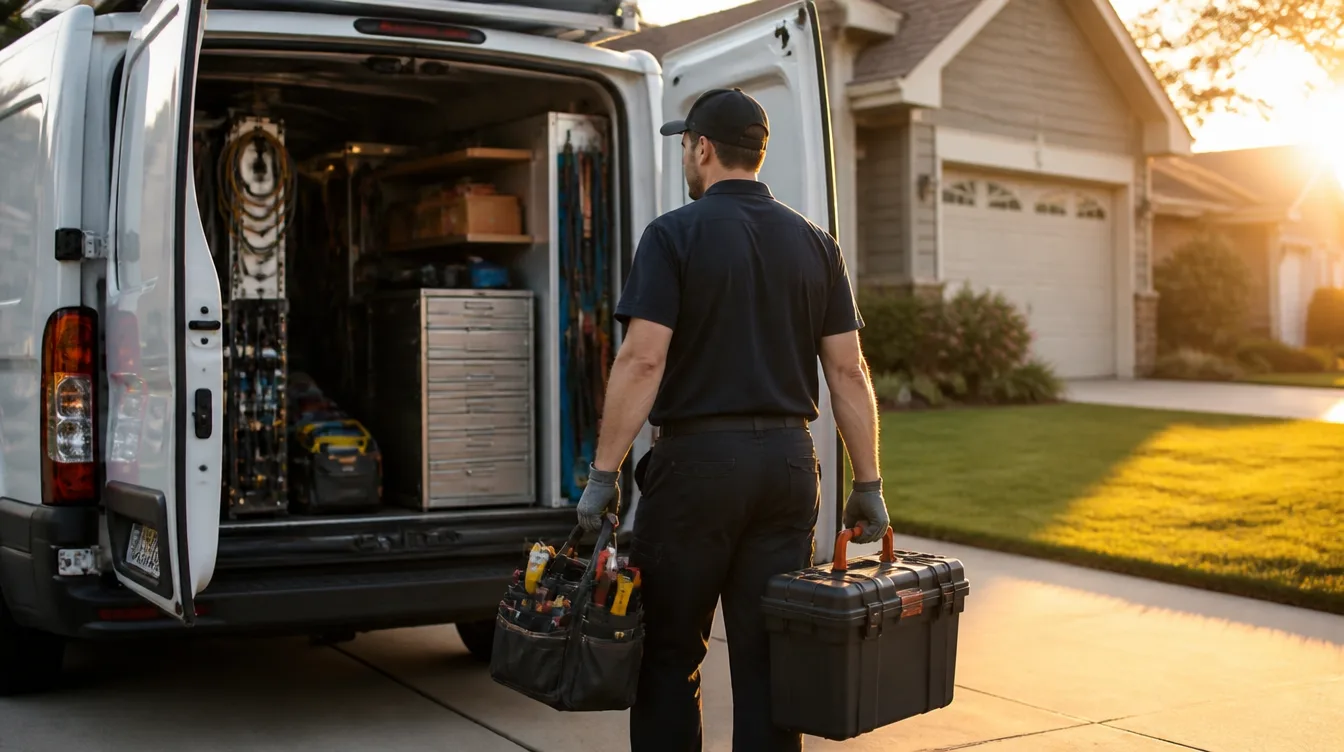
Put a real number on it. A missed service call is $150 to $400. A missed replacement is $8,000 to $16,000. A receptionist is a line item in this plan, the same as insurance or fuel. Hiring a person costs a salary you cannot afford in month one. An AI receptionist like EveryDial answers every call in your business name and books the job while you are on the roof, for a fraction of that salary. Do the math for your own shop with our missed-call cost calculator before you decide voicemail is good enough.
EveryDial answers every call in your business name and books the job while you're on a roof or in a crawlspace. Free to try.
Marketing and sales plan
Your plan should say, in a few sentences, how you will get customers and keep them. Most of it is free: a complete Google Business Profile, a steady stream of reviews from happy customers, and referrals. Paid ads come later, once you know a customer is worth more than they cost to win. Our HVAC marketing guide lays out the full plan in order of payoff if you want more than fits here.
Management and organization
Even as a solo owner, name the roles you are filling: field tech, dispatcher, bookkeeper, and owner. Writing them down shows a lender you know the work, and it tells you which job to hand off first when you can afford to. Pay yourself on purpose, too. One common rule is to set aside 5 to 6 percent of revenue for your own salary, which means a $60,000 salary implies about $1.2 million in revenue at 5 percent. For scale, the median HVAC contractor earns $83,446, with the middle 57 percent earning between $83,446 and $209,355.
What a 24-year HVAC owner says
The polished guides describe a smooth climb. A longtime owner on Reddit who ran an HVAC company for 24 years described the discipline that kept his afloat. He priced every job so it covered 40 percent direct job costs, 30 percent overhead, 20 percent actual profit, and 10 percent as a buffer. Miss that math and you are working for free without knowing it.
Two more habits stood out. He started in 1994 with $3,200 and never carried a truck payment in 24 years, because a van does not make money, profitable jobs do. And his best leads never came from paid ads. They came from referrals, from home inspectors and real estate brokers who sent him the customers other shops were too slow to answer. Build those relationships early and your marketing budget can stay small.
Turning the plan into your first jobs
Once your plan is on paper, put the money sections to work. Price your jobs with the estimate template above, then lock in your terms with our free HVAC contract template. A business plan is rarely required to get an HVAC license, since licensing is about your trade exams and insurance and the rules vary by state. A lender is different. A bank or SBA officer will want the costs, margins, and break-even math above laid out clearly before they say yes.
Frequently asked questions
What is the $5000 rule for HVAC?
The $5,000 rule is a homeowner's rule of thumb for deciding whether to repair or replace a unit, not a business-planning term. The idea is that you multiply the age of the system by the cost of the repair, and if the result is high enough, replacement makes more sense than another fix. Because it is a guide for buyers, it does not belong in your business plan. It is still worth knowing, since it shapes how you advise customers who are on the fence.
How profitable is a HVAC business?
Net margins are thin at first and grow with scale, roughly 2 to 4 percent at $500,000 in revenue and rising toward 11 to 15 percent at $2 million for a well-run shop. A new one-truck shop usually earns less while it builds a customer base. Profit comes from tight cost control and steady booking, not from charging the most per job.
Can HVAC make $100,000 a year?
In revenue, that is very reachable for one busy truck, and many owners clear well above it. As a reference, the median HVAC contractor earns about $83,446, with the top half of the field earning more. Reaching $100,000 in take-home pay usually needs steady replacements and maintenance agreements on top of service calls, not service calls alone.
How much money is needed to start an HVAC business?
It ranges from a few thousand dollars to over $100,000, and the reason is what you already own. If you bring a truck and a full tool set, a license, insurance, a phone, and software can put you on the road for a few thousand. If you are buying the truck and tools new, carrying first inventory, and covering a few months of living costs, a realistic figure is $75,000 to $120,000.