
Contents
Key points
- Starting a plumbing business typically costs $10,000 to $100,000 or more, mostly in licenses, insurance, and equipment.
- A solo truck can produce roughly $390,000 a year in revenue, but a solo plumber only needs about $334 a day to reach $100,000.
- Undercapitalization, not lack of skill, is a top reason plumbing businesses fail. Plan for 12 to 18 months of living expenses, not just startup costs.
- Missed calls are a line item too. Every call that goes to voicemail is a job that pays a competitor instead of you.
A plumbing business plan does not need to read like an MBA paper. It needs real numbers: what it costs to open, what a truck can realistically earn, and how long you can last before the business pays your bills. This guide gives you those numbers, plus the parts every lender or license board expects to see.
Below is the full plan in order, a worked first-year budget for a one-truck shop, and the hard first-year realities that no polished guide mentions.
What to put in your plan
Keep it to the sections that help you make decisions, and that a lender or licensing board expects to see.
- Executive summary: one paragraph on the business and your first-year goal. Write this last.
- Company description: your structure (LLC or sole proprietor), your service area, and any niche (repair, new construction, or a mix).
- Market research: who else serves your area and who your customers are, homeowners, property managers, or general contractors.
- Services and pricing: the core jobs you do and how you charge for them. Our plumbing estimate template covers this section for you.
- Marketing plan: how you will get found and get the phone to ring.
- Operations and staffing: your truck, tools, and whether you hire help or stay solo.
- Financial plan: startup costs, first-year projections, and your break-even point.
Startup costs for a plumbing business
Starting a plumbing business can cost roughly $10,000 to $100,000 or more, depending on your state and how big you start. The range is wide because the big swing items, a truck and a full tool set, can be bought used and cheap or new and complete. Typical line items:
- Licenses and permits: $500 to $5,000.
- Insurance: $1,000 to $5,000 a year.
- Equipment and tools: $5,000 to $20,000 or more.
- Legal and accounting setup: $1,000 to $5,000.
Add a used service van, a phone number, and basic scheduling software, and you can see how the low end fits a bare-bones solo shop while the high end covers a second truck or a full retail-facing operation.
How much a plumbing business can make
Nationally, plumbers, pipefitters, and steamfitters earned a median $62,970 a year, or $30.27 an hour, in 2024. That is pay for an employee, not business revenue. But it is a useful floor. Your business needs to clear that per truck before it beats a steady job. The field is growing too. About 504,500 jobs exist nationwide, with roughly 44,000 openings projected each year through 2034. Demand is not the hard part.
For revenue per truck, contractor coaching firm CertainPath estimates a service truck can produce about $1,500 a day, or roughly $390,000 a year over 260 working days. Their target is 15 percent net profit, with about 10 percent of revenue budgeted for marketing. That number assumes a busy, established shop with steady booking, not your first month.
A worked first-year budget for a one-truck shop
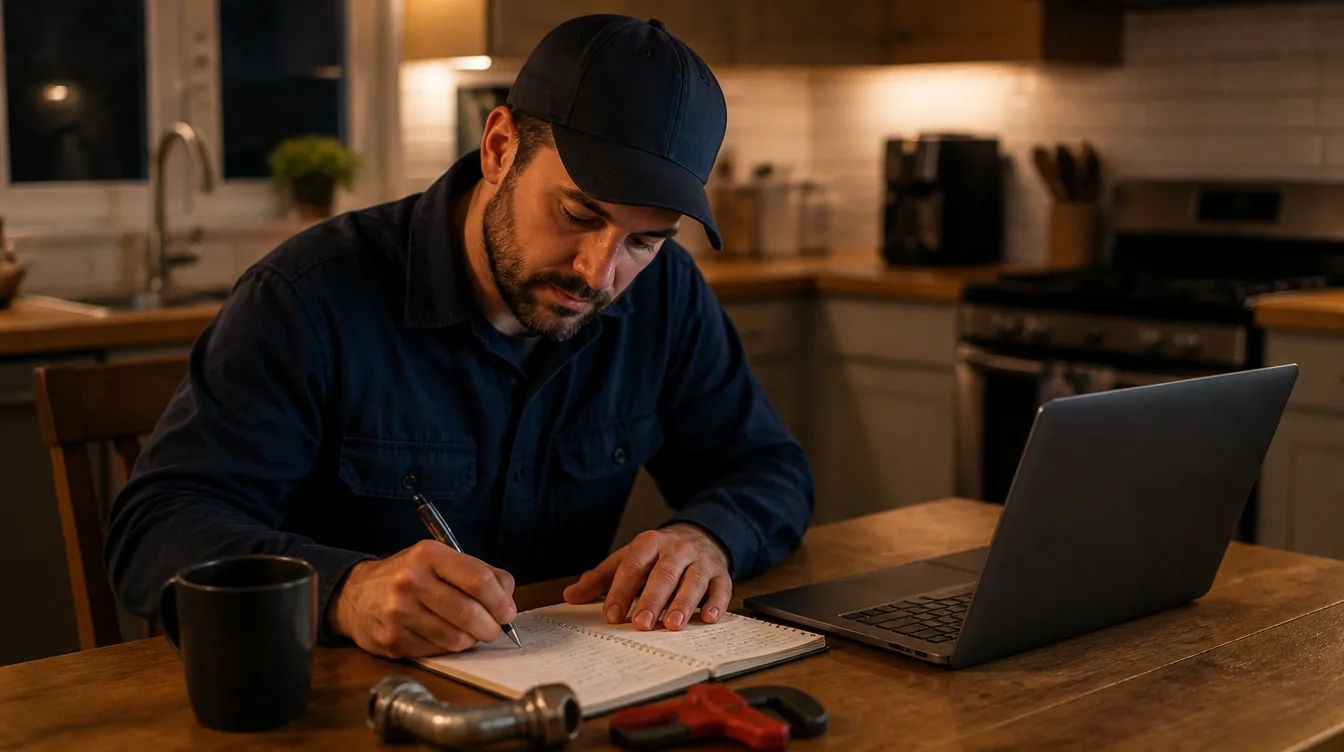
Here is the piece most guides skip: an actual first-year budget, not a description of one. This uses only the ranges above, for a solo owner-operator running one truck.
Startup budget
- License and permits: $2,000 (mid-range estimate)
- Insurance for year one: $3,000
- Equipment and tools: $12,000 (used van included)
- Legal and accounting setup: $2,000
- Total startup cash needed: about $19,000
First-year revenue math
A solo plumber does not need CertainPath's full $390,000 truck number to make a living. As one owner put it on Reddit, you only need to make about $334 a day to reach $100,000 a year. That number assumes long field days plus a few hours of networking and marketing at home, and it is a far more realistic first-year target than a full truck's theoretical output.
- Target: $334 billed a day, about 300 working days a year, gets you to $100,000 in revenue. Hold a strict 5-day week (260 days) and the same daily target lands near $87,000, so most solo owners work closer to six days.
- At a repair rate of roughly $100 an hour plus materials, that is 3 to 4 billable hours a day before parts markup, which is realistic for a solo operator handling calls, driving, and paperwork too.
- Subtract the $19,000 startup budget and typical monthly costs (insurance, fuel, software, phone), and a disciplined solo year can clear real profit, not just revenue.
Break-even and runway
Here is the part most polished guides skip. Your break-even math needs your living expenses in it, not just business costs. Add up your monthly rent or mortgage, food, insurance, and debt payments. Multiply that by 12 to 18 months. That is the cash cushion you need before you quit a steady paycheck. This gap has a name: undercapitalization, having enough to open the doors but not enough to eat while the business ramps up. It is one of the most common reasons new trade businesses fail, ahead of bad workmanship or bad luck.
What the polished guides leave out
The polished business-plan guides describe a steady climb. The real first year is usually rougher. Many owners lose money in year one, break even in year two, and only turn a real profit once a client base and steady referrals are built. The common thread among the ones who make it: they stacked a year or more of cash before quitting a steady paycheck, worked long weeks early on, and grew on word of mouth instead of paid ads.
- Side work first. Build a client base on nights and weekends before quitting a full-time plumbing job, so the business has some revenue on day one.
- Bookkeeping is a make-or-break skill. Owners who struggle are often good plumbers but weak on tracking cash, invoices, and taxes, not weak on pipes.
- Solo versus hiring is a real debate. Some owners stay solo for years to keep overhead low and quality consistent. Others hire early to grow faster and accept thinner margins per job. Neither side is wrong; the choice depends on how much risk you want.
- Growth is not a straight line. A first-year loss is common, not a sign of failure. Plan your runway assuming year one loses money.
Marketing and getting your first customers
Your plan should say, in a few sentences, how you will get and keep customers. Most of this is free: a complete Google Business Profile, reviews from every happy customer, and referrals from people who already trust you. Our plumbing marketing guide covers the full plan in order of payoff if you want more detail than fits here.
One line belongs in your financial plan that most plans skip entirely: missed calls are lost revenue. Every plumbing job starts with a phone call, and a caller who hits voicemail usually just dials the next plumber. If you are the only one answering the phone, a job under a sink means every other call waits, and some of those callers will not wait. EveryDial exists to close that gap, answering and booking jobs when you cannot pick up, so the marketing you already paid for does not leak away on missed calls.
EveryDial answers your phone and books the job when you're on a call or under a sink. Free to try.
Licensing, insurance, and next steps
A business plan is not usually required to get a plumbing license. Licensing is about your trade qualifications, exams, and insurance, and the rules vary by state, so check your state licensing board directly. Lenders are a different story: a bank or SBA loan officer will want to see the numbers above laid out clearly before they say yes.
Once your plan is on paper, put the pricing section to work with our free plumbing estimate template and lock in your terms with our free plumbing contract template. Then use our missed-call cost calculator to see what a missed call is actually costing your new business before you have your first full month of jobs behind you.
Frequently asked questions
How profitable is a plumbing business?
Contractor coaching firm CertainPath targets 15 percent net profit on a service truck doing roughly $390,000 a year in revenue. A new solo shop usually earns less in year one while it builds a client base, and some owners report a loss in their first year before profit follows.
Can a plumber make 250k a year?
Yes, though usually not in year one. It generally takes an established client base, steady referrals, and often a second truck or a helper to reach that level. Many owners report a loss or thin margins in their first year before the profit follows.
How much does it cost to start a plumbing business?
Roughly $10,000 to $100,000 or more, depending on your state and how big you start. Licenses and permits run $500 to $5,000, insurance $1,000 to $5,000 a year, equipment and tools $5,000 to $20,000 or more, and legal and accounting setup $1,000 to $5,000.
Do I need a business plan to get a plumbing license or loan?
Usually not for the license itself. Licensing boards care about your trade qualifications and insurance, not a written plan. A bank or SBA loan is different: lenders want to see your costs, pricing, and break-even math laid out clearly before they approve funding.
How to make 300k a year as a plumber?
It takes volume beyond one solo truck: either a second truck and a hire, or a very full solo schedule at a strong hourly rate plus materials markup. Expect long hours and steady reinvestment before the revenue catches up.